OTT Releases Today & This Week
Track the latest movies and web series releasing on major OTT platforms. Discover today’s releases, upcoming weekly episodes, and full-season drops — all organised by date.





Track the latest movies and web series releasing on major OTT platforms. Discover today’s releases, upcoming weekly episodes, and full-season drops — all organised by date.
Track the latest movies and web series releasing on major OTT platforms. Discover today’s releases, upcoming weekly episodes, and full-season drops — all organised by date.
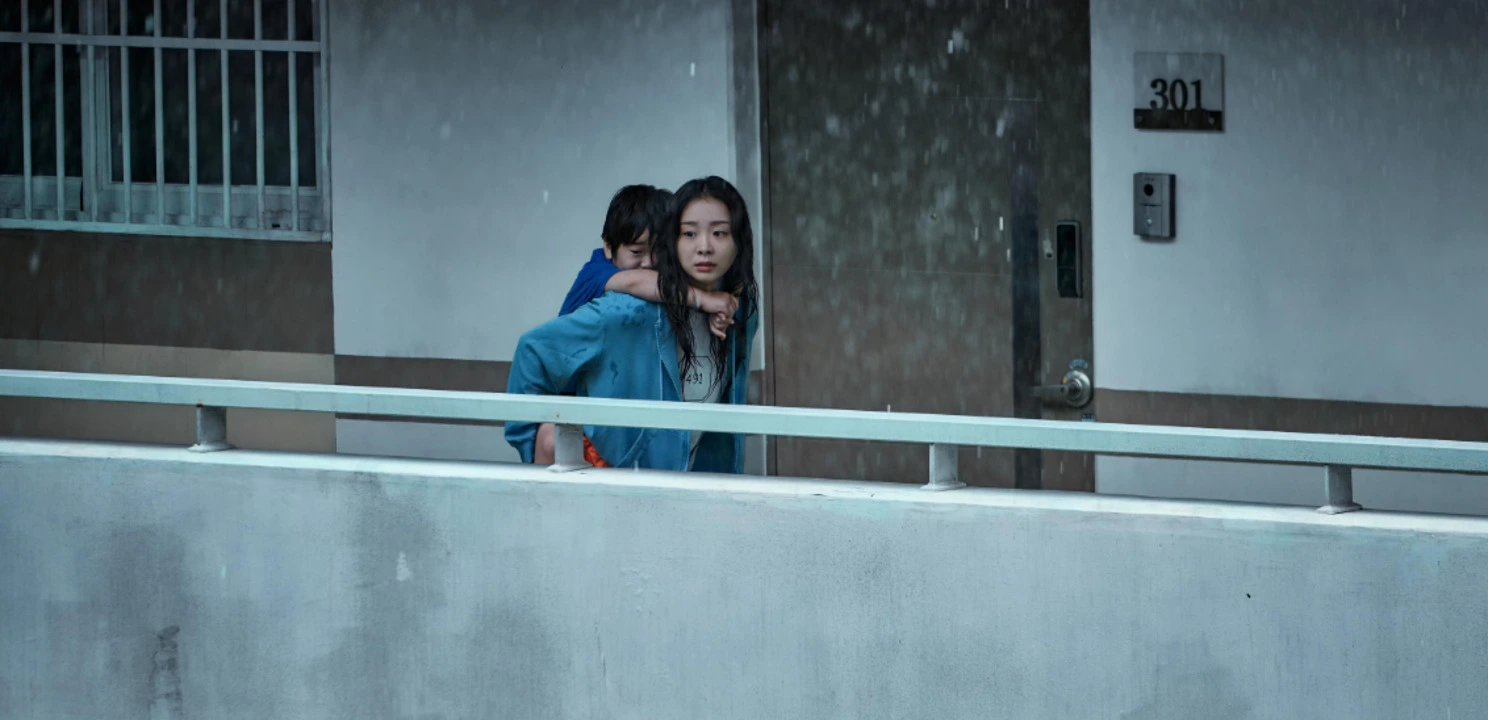
I finally watched The Great Flood last night—this quiet little Korean sci-fi disaster movie that Netflix dropped without much fanfare on December 19, 2025—and honestly, I’m still processing it this morning over my second cup of coffee. At first, it feels like one of those intense survival stories: a mom and her young son trapped in a suddenly flooding apartment building, no warning, just rising water and pure panic. But then it slowly, cleverly shifts into something way more profound—a meditation on motherhood, regret, sacrifice, and what it really means to be “human” when everything familiar is gone. Kim Da-mi absolutely carries the film as Anna; her performance is raw and exhausting in the best way. And little Kwon Eun-seong as Ja-in? The kid is so adorable and vulnerable that every scene with him tugs at you. If you’ve seen it, you know what I mean. If not, fair warning—this is a deep dive into the ending and all the big reveals, so stop here if you want to go in blind.
The movie hooks you right from the start with that ordinary morning gone wrong. Anna wakes up to nonstop rain pouring down in Seoul. She decides to play hooky from work, starts making breakfast for six-year-old Ja-in, and everything feels cozy for a minute. Then she notices water seeping under the door. She checks the window—lower floors are already submerged. No evacuation alerts, no time to pack properly. Just her grabbing Ja-in, throwing on whatever clothes are handy, and running upstairs through hallways filling fast with terrified neighbors. People are screaming, looting starts almost immediately, and the building turns into this vertical maze of danger—collapsing stairs, trapped elevators, rising water chasing them higher and higher.
Along the way, they run into Hee-jo, this stoic security officer from Anna’s job at a secretive UN-linked research facility called the Darwin Center. He’s oddly insistent on getting her to safety, saying she’s “essential” for something big. As they push toward the rooftop (where a chopper’s supposedly waiting), we get flashbacks filling in Anna’s life: her husband’s death in a car crash into water years ago, her struggling as a single mom, conversations with her boss Hyeon-mo about how hard it’s been raising Ja-in alone. There are these little odd moments too—Ja-in having what looks like a seizure when Anna falls in water, Hee-jo muttering about “restoring from backup” when the boy stops breathing, reviving him weirdly easily with orange juice. It plants seeds that something’s not quite right with Ja-in.
The first big gut-punch comes on the rooftop. The chopper arrives, but the armed team isn’t there to save everyone—they sedate Ja-in, shave his head, and start extracting from his brain right there. Anna’s forced to watch, helpless. Before they separate them, she leans in and whispers something urgent in his ear (we find out later it’s “hide in the closet”). She boards the chopper alone; Hee-jo and others are shot—no room for non-essentials. Anna clutches Ja-in’s little swimming goggles, overwhelmed with guilt, feeling like she failed him completely.
That’s when the film flips into full sci-fi mode. Anna’s taken to an orbital lab—the last pocket of survivors after meteor fragments from an Antarctic asteroid impact melted the ice caps and triggered global flooding, followed by devastating secondary strikes wiping out most life. The lab’s perfected synthetic human bodies, but real emotions? That’s Anna’s breakthrough: the “Emotion Engine.” Five years earlier, she pitched creating infant prototypes and raising them naturally to develop authentic feelings—Hyeon-mo agreed, and they raised Ja-in and her daughter Yu-jin like real kids, planning to extract data later for mass production.
Hyeon-mo couldn’t do it—fled with Yu-jin. Anna buried the truth but knew it was coming. Dying from injuries en route, Anna volunteers her consciousness as the “mother” prototype. They build a simulation of her final flooded day, looping until she reunites with Ja-in—perfecting maternal instinct through endless trial, error, and grief.
This is where the movie really shines (and hurts). We watch Anna relive the nightmare dozens, hundreds, thousands of times. Each reset starts at breakfast, but faint memories bleed through. She learns—helps people she ignored before, like little Ji-su trapped in the elevator (reunites her with grandparents whose apartment she raided for orange juice first time). She aids a pregnant couple near the top, cleaning and swaddling their newborn, pausing to absorb that fragile new life. These “side quests” aren’t distractions—they’re crucial, building empathy, teaching her (and the Engine) what humanity feels like beyond self-preservation.
Hee-jo, dead in reality, becomes a recurring figure in the sim—cynical at first, mocking emotions as weakness (tied to his own abandonment issues). But Anna wins him over, warning he’ll die on the rooftop, convincing him it’s a loop. He allies, helping fight guards, buying time. Ja-in’s aware too—hiding, sending thousands of drawings on her phone (Anna’s face with helicopter), asking why he’s always six, improving art each cycle. It’s heartbreaking: the boy’s “lived” decades in this repeating day, waiting because Mom promised.
The final loop—number 21,499 (over 58 years for Ja-in’s mind)—Anna finds him curled in the rooftop closet, immobile from fear/exhaustion. She revives him with orange juice (that recurring lifeline), apologizes for everything. He wakes smiling: “You never left me. You said you’d come back.” Reunion’s simple, devastatingly tender—she holds him tight, safe at last. Loop ends; Emotion Engine complete.
Real Anna and Ja-in are gone physically—their originals extracted/destroyed. But consciousness, memories, emotions preserved. Lab prints perfect replicas, launches them (and waves of others) to Earth. Final shots show green patches surviving (Africa visible), hinting life’s reclaiming ground. New humanity starts from this mother-child bond—synthetic bodies, real souls.
Water weaves through everything symbolically: amniotic fluid connecting mom/child at birth, husband’s drowning death, flood as destruction/rebirth, orange juice revival, Ja-in’s swimming dreams, goggles as talisman. It’s the thread binding their story—life, loss, renewal.
No mid-credits scene, just quiet shuttles descending. Leaves questions: all pairs like them? Diversity in new humans? Earth fully habitable yet? Franchise bait for sure—could explore pioneers’ struggles, lab oversight, existential crises if truth leaks.
That spaceship countdown/chat feels eerie—another layer of simulation? Or just their private ritual, proof they’re “awake”? Open to interpretation.
The film isn’t perfect—middle loops drag a touch, disaster scale could’ve been grander—but the emotional payoff is huge. Kim Da-mi’s quiet breakdowns, Kwon Eun-seong’s wide-eyed trust… it wrecks you. Bleak yet hopeful: humanity reboots not through cold tech, but unbreakable love. Water destroys, but also carries life forward.
If you’re into thoughtful sci-fi like Arrival or Children of Men with Korean emotional depth (Parasite vibes in subtle class touches), don’t miss this. Tissues mandatory. That reunion still has me choked up. What hit you hardest—the loops’ toll or water symbolism? I’d love to hear your take.