OTT Releases Today & This Week
Track the latest movies and web series releasing on major OTT platforms. Discover today’s releases, upcoming weekly episodes, and full-season drops — all organised by date.





Track the latest movies and web series releasing on major OTT platforms. Discover today’s releases, upcoming weekly episodes, and full-season drops — all organised by date.
Track the latest movies and web series releasing on major OTT platforms. Discover today’s releases, upcoming weekly episodes, and full-season drops — all organised by date.
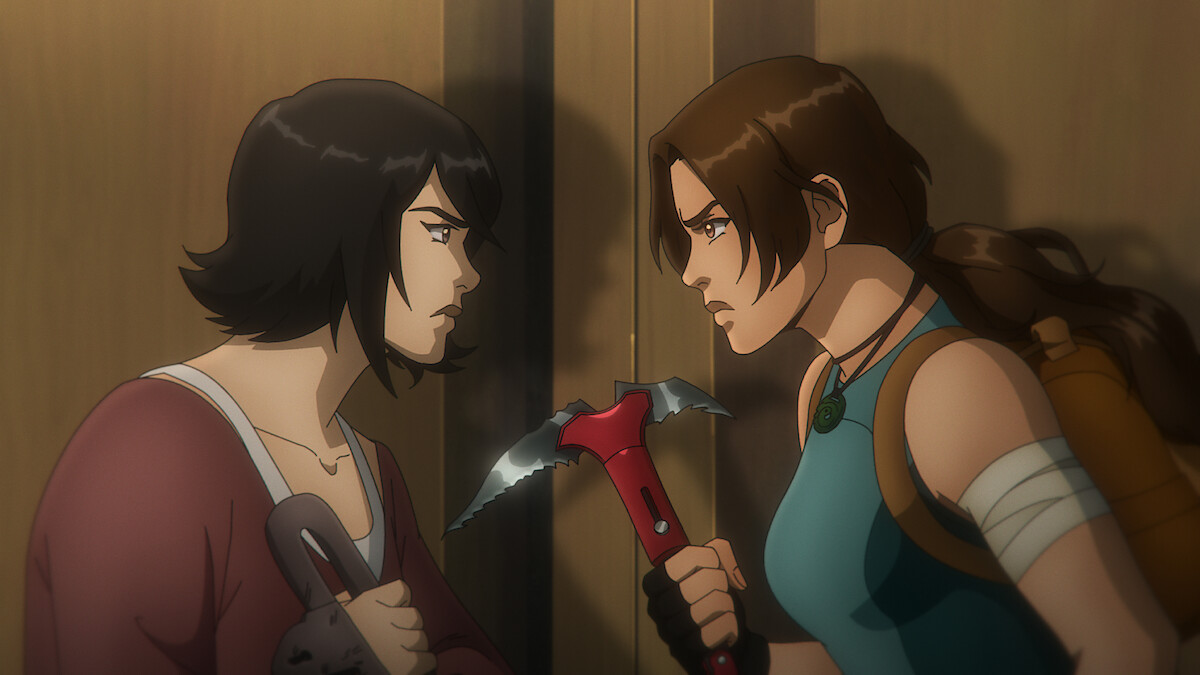
Netflix’s animated series Tomb Raider: The Legend of Lara Croft wraps up with its second season, diving deeper into Yoruba mythology while pushing Lara toward some real personal growth. The big bad this time is Mila, a slick tech mogul running a company called Pithos. She comes off as reasonable at first—talking up “ethical” digs and planetary salvation—but that’s all a front for her power-hungry scheme.
Mila’s plan revolves around gathering ancient Orisha masks, powerful artifacts tied to Yoruba deities that grant control over nature and other forces. She kidnaps Lara’s close friend Sam Nishimura (with help from her loyal aide Fig) to lure Lara into handing over a mask from her father’s old collection. Mila claims she’s just restoring them to their origins, but really, she’s after god-like dominance—think wiping out chunks of humanity to “reset” the world, echoing that classic villain savior vibe.
Her obsession traces back to a younger Mila encountering Ogun, an Orisha who shared the masks’ secrets before realizing her dark ambitions and destroying his own mask in protest. Undeterred, Mila hunts down and eliminates guardians like Oko, Kehinde, and Babaluaye to claim theirs. Her ultimate target? Eshu’s mask—the trickster god of chaos and death, whose powers could amplify the others and let her unleash widespread destruction for immortality.
Lara, Sam, and Eshu piece it together and bait Mila into a showdown at Eshu’s ancient lost kingdom. In the epic finale, Eshu (joined by siblings Yemeja and Taiwo) outsmarts the overpowered Mila. Using teleportation and the combined mask forces, he reclaims them and literally buries her alive.
This victory redeems Eshu too—he once fled invaders, abandoning his people out of fear, something that haunted him. Facing Mila head-on restores his siblings’ trust and his own self-respect, proving courage can conquer deep regrets. He hands the masks back to their father (the supreme Orisha), who hints at rebuilding by finding worthy new bearers to serve the greater good, not personal gain.
Mila’s twisted “save the world” rhetoric hits Lara hard, forcing her to confront her dad Richard Croft’s legacy as basically a high-class looter—hoarding or flipping priceless cultural treasures. Inspired (but rejecting Mila’s extreme tactics), Lara decides to make amends her way.
She tips off Interpol buddy Camilla Roth about a smuggler like Mehrak Darvish raiding sites, and starts repatriating her father’s collection to their rightful cultures. It’s a quiet, respectful correction—no destroying his memory, just doing right. This contrasts sharply with Mila’s brutal “ends justify the means” approach, highlighting how real change comes from coexistence and humility toward history and nature, not domination.
From now on, Lara’s ditching the “tomb raider” label for something more guardian-like—protecting relics and stopping thieves. That “Detective Croft” nickname from Camilla? It teases her teaming up with authorities to hunt artifact smugglers. A fresh chapter for her character.
Even though the series got the axe (Netflix confirmed Season 2 as the last, likely due to viewership not exploding and competition from upcoming live-action projects), it still drops a hook for what could’ve been Season 3.
The closing moments show a mysterious Black woman—clearly tied to Lara’s history—staring at an old school photo of two young girls in uniforms. One looks like a lighter-haired kid version of Lara, the other like this woman’s younger self. She’s got creepy altered pics of adult Lara with eyes scratched out, suggesting deep grudge—maybe blinding her metaphorically or literally, or stripping her of support.
Fig (who survives her clash with Lara) shows up at this woman’s desert dig site, where they’re unearthing a massive wheel-like artifact (possibly tied to ancient symbols like a Dharma wheel or something Egyptian). Fig, ignoring Lara’s warning about bad alliances, teams up anyway. This new foe knows Lara’s vulnerabilities (especially her friends) and is gearing up for revenge—perhaps over some childhood fallout or lost loved one.
Sadly, with the cancellation, we’ll never get resolutions. Fans familiar with the games might spot connections to classic villains (like hints of Natla from older titles popping up in some recaps), but it’s left hanging. The season blends thrilling action, cultural respect, and Lara’s evolution beautifully— a solid sendoff, even if bittersweet. If you’ve binged it, what stood out most, or any theories on that photo mystery?